
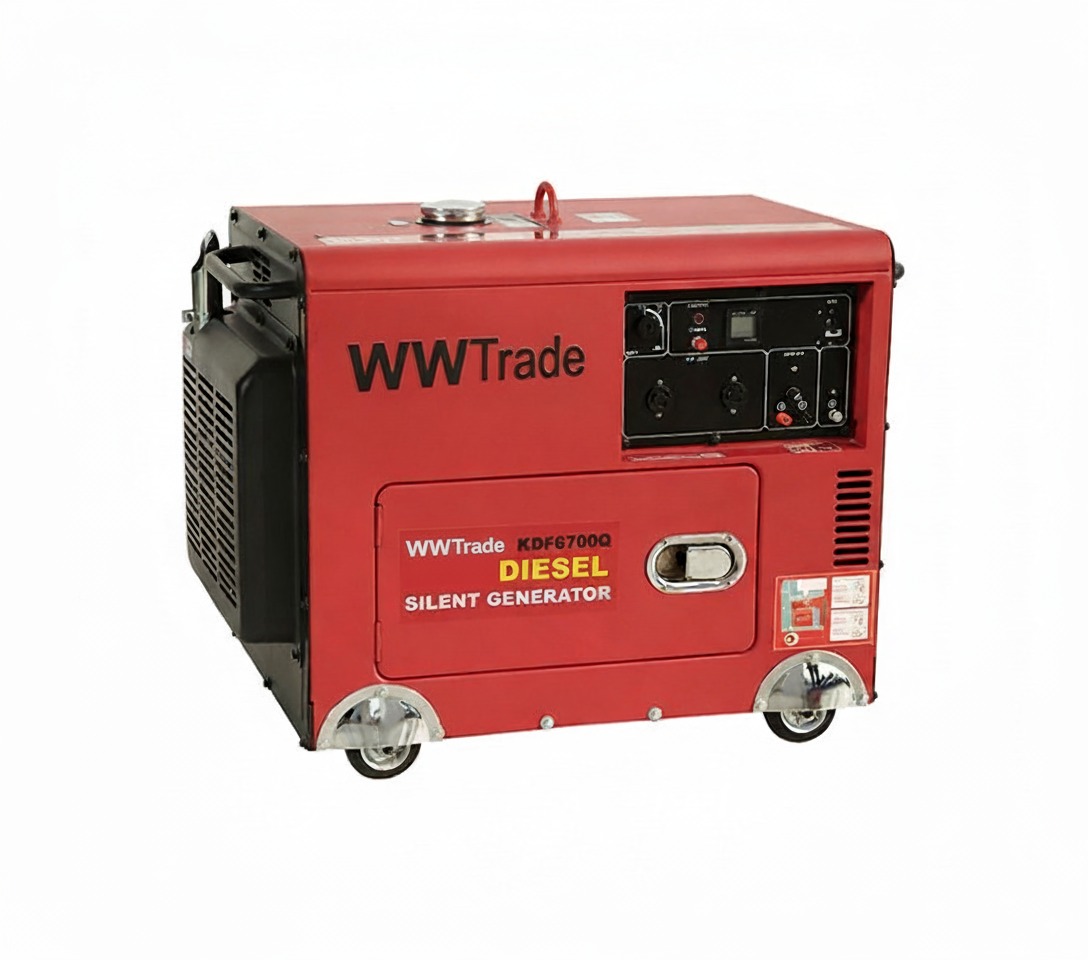
Reliable power supply is critical for commercial facilities to maintain smooth operations and protect sensitive equipment during outages. From restaurants to healthcare providers and retail stores, choosing the correct commercial backup power system demands a precise understanding of power requirements and load characteristics. This guide walks through the entire selection process—from power calculation and load matching to startup method decisions and maintenance—while highlighting advanced technologies like brushed excitation and intelligent voltage regulators that ensure system stability and emergency efficiency.
Commercial outages can have serious repercussions including revenue loss, safety hazards, and damage to critical equipment. Industries such as foodservice, retail, and healthcare face unique power continuity challenges:
Understanding these application-specific needs drives optimal system sizing and configuration.
Two key technologies enhance backup power reliability:
Calculating correct system size hinges on thorough load analysis:
Step 1: Identify Total Connected Load
Assess all electrical equipment that must remain operational during an outage. For example, a mid-sized restaurant might have:
Totaling approximately 19 kW.
Step 2: Apply Load Factors
Not all equipment runs simultaneously at full load. Applying a diversity factor (typically between 0.7 and 0.9 for commercial sites) adjusts total demand. Assuming 0.8 diversity factor, adjusted load becomes:
19 kW × 0.8 = 15.2 kW
Step 3: Account for Starting Currents and Power Factor
Motors and compressors have high starting currents (3–7 times running current). Adding a margin of 25%-30% covers this surge. Also, correcting for power factor (typically 0.8) ensures generator sizing matches real power needs:
Required generator output = 15.2 kW × 1.3 ÷ 0.8 ≈ 24.7 kVA
Thus, a generator rated approximately 25 kVA would effectively serve the restaurant’s backup power needs.
Backup generators typically start via electric or pneumatic starters. Electric starters offer precise control and faster response, preferred for facilities with frequent outages. Pneumatic starters, while simpler, may lag slightly but excel in harsh environments. The choice also depends on system size, fuel type, and maintenance capabilities.
Routine inspection is vital. Critical aspects include:
Integrating modern remote monitoring systems allows proactive fault detection, reducing downtime and repair costs.
1. Restaurant Chain: Implemented 30 kVA diesel generators with brushed excitation and IVRs, ensuring power for refrigeration and cooking appliances even during peak season outages, resulting in zero food spoilage incident rates during three unexpected blackouts in six months.
2. Retail Store: Selected 20 kVA systems emphasizing quick electric start and voltage regulation to protect POS systems, leading to improved customer satisfaction with uninterrupted service.
3. Medical Clinic: Adopted dual-tiered power backup with both batteries and a 40 kVA generator supporting critical diagnostics equipment, implementing scheduled maintenance ensuring 99.9% uptime since installation.
Investing in the right backup power system with smart technological features guarantees commercial continuity and safeguards equipment investment. Combining proper sizing, advanced regulation technologies, and rigorous maintenance plans empowers businesses to face power disruptions confidently.
 138
|
138
|
 V-twin diesel engine
water-cooled diesel technology
direct injection combustion system
agricultural machinery power
diesel engine efficiency
214
|
narrow trench compaction
municipal road construction equipment
high-efficiency plate compactor
trench dead zone compaction
construction equipment mobility
341
|
Narrow deep trench compaction
Municipal road construction equipment
Corner area compaction
High - efficiency plate compactor
Construction equipment flexibility improvement techniques
393
|
plate compactor for gravel soil
edge zone compaction
municipal road construction equipment
uniform ground compaction
trench compaction solutions
45
|
Thrust adjustment device usage
Compaction speed control skills
Plate compactor operation guide
Soft soil foundation compaction speed adjustment
Corner area compaction plan
V-twin diesel engine
water-cooled diesel technology
direct injection combustion system
agricultural machinery power
diesel engine efficiency
214
|
narrow trench compaction
municipal road construction equipment
high-efficiency plate compactor
trench dead zone compaction
construction equipment mobility
341
|
Narrow deep trench compaction
Municipal road construction equipment
Corner area compaction
High - efficiency plate compactor
Construction equipment flexibility improvement techniques
393
|
plate compactor for gravel soil
edge zone compaction
municipal road construction equipment
uniform ground compaction
trench compaction solutions
45
|
Thrust adjustment device usage
Compaction speed control skills
Plate compactor operation guide
Soft soil foundation compaction speed adjustment
Corner area compaction plan
.jpg?x-oss-process=image/resize,h_800,m_lfit/format,webp)





.jpg?x-oss-process=image/resize,m_fill,h_800,w_800/format,webp)