.jpg?x-oss-process=image/resize,h_1000,m_lfit/format,webp)
Welding quality strongly depends on correctly setting your welding current. Within the 70–220A adjustable range, improper current selection causes weld defects like uneven seams, excessive spatter, and gas pores. This guide offers you practical steps to optimize your welding current tailored to material type and thickness, ensuring stable, reliable welds every time.
The 70–220A current range covers a broad spectrum of welding tasks. Electrical current controls the heat generated during welding and directly affects penetration depth and bead shape. Too low current results in weak penetration and unstable arcs, while excessive current causes burn-through and spatter.
Quick Tip: Always correlate current with material thickness—start with about 20–30 Amps per millimeter of low carbon steel thickness as a baseline.
Different materials respond uniquely to welding currents due to conductivity and thermal characteristics. Below are recommended current settings based on typical thicknesses:
| Material | Thickness | Recommended Current (A) |
|---|---|---|
| Low Carbon Steel | 1.5 mm | 90A |
| Low Carbon Steel | 5 mm | 170A |
| Stainless Steel | 2 mm | 100A |
| Aluminum | 3 mm | 110A |
These values serve as starting points. You must fine-tune based on joint configuration, welding position, and consumables.
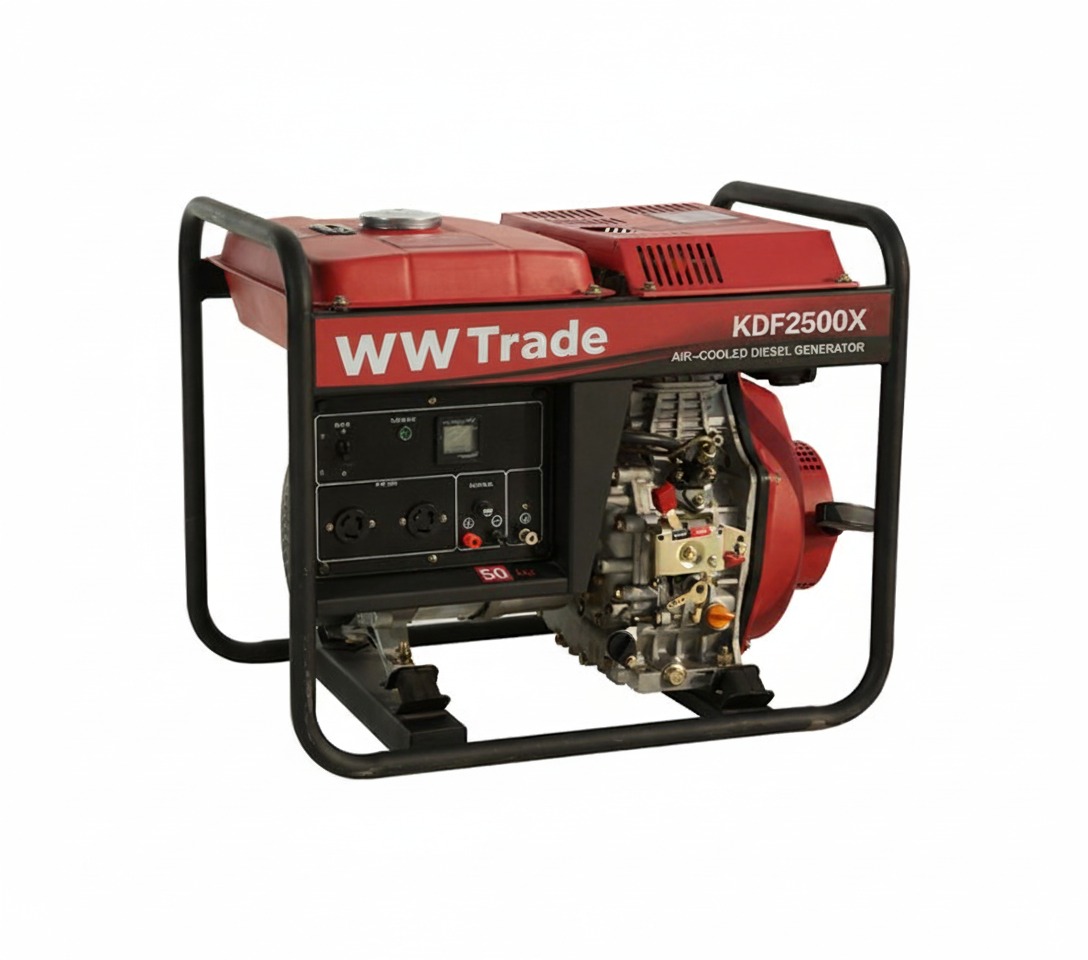
Your welding machine’s duty cycle is critical when selecting current for extended operations. For example, machines equipped with the KD192FE engine plus intelligent AVR voltage stabilization system can maintain stable arcs at 60% load for continuous runs.
Practical advice: For any welding session longer than 2 hours, limit your current to no more than 180A to prevent device overheating and ensure operational safety.
.jpg)
Weld defects often trace back to improper current or arc length:
Maintaining a short, stable arc tuned with the right current significantly minimizes these issues. Use the rule of thumb: "Short arc stable, pores are able;"
"Long arc weak, defects peak."
What challenges have you faced with welding current adjustment? Share your experiences and tips in the comments below — your insights could help others fine-tune their welding parameters.
 182
|
182
|
 plate compactor thrust adjustment
soil compaction speed control
KCPKDP60PC operation guide
soft ground compaction techniques
edge area compaction solutions
291
|
plate compactor
ground compaction
construction equipment
construction efficiency
compaction technology
296
|
mid-sized concrete cutter
road surface cutting efficiency
adjustable cutting depth
anti-rust water tank
concrete cutting machine performance
446
|
Concrete cutter selection
Road surface cutting equipment performance
Cutting depth adjustment
Anti-rust water tank advantages
Equipment operational convenience
380
|
Concrete cutter T400 operation
Road surface cutting safety
Blade replacement tutorial
Construction equipment maintenance
Asphalt road surface cutting depth
plate compactor thrust adjustment
soil compaction speed control
KCPKDP60PC operation guide
soft ground compaction techniques
edge area compaction solutions
291
|
plate compactor
ground compaction
construction equipment
construction efficiency
compaction technology
296
|
mid-sized concrete cutter
road surface cutting efficiency
adjustable cutting depth
anti-rust water tank
concrete cutting machine performance
446
|
Concrete cutter selection
Road surface cutting equipment performance
Cutting depth adjustment
Anti-rust water tank advantages
Equipment operational convenience
380
|
Concrete cutter T400 operation
Road surface cutting safety
Blade replacement tutorial
Construction equipment maintenance
Asphalt road surface cutting depth